Multiplayer Guide: PvP, Co-op, and Online Modes in Halloween: The Game
Halloween: The Game is an asymmetrical online horror experience set in Haddonfield on Halloween night, 1978, where one player controls Michael Myers and a small team of Survivors works together to survive until help arrives. This guide covers every online mode, how to configure a lobby, crossplay and controller options, and the communication habits and tactics that separate a coordinated team from a group of easy victims.
Online Modes and Match Structure
The core of Halloween: The Game is its one-versus-many online mode. A single player takes on the role of the Shape, Michael Myers, while the remaining players spawn as Survivors scattered across the suburban streets and homes of Haddonfield. Michael wins by silencing the town and eliminating the Survivors before they can bring help; the Survivors win by raising the alarm, keeping the neighborhood's civilians and children out of Michael's reach, and holding out until the police respond.
Matchmaking offers a preference for either side. Selecting Michael places you in a queue for the killer slot, while selecting Survivor fills the team roles. Because far more players want to be the Boogeyman than there are killer slots, expect longer waits when queuing solely as Michael, and consider queuing with a flexible preference if you simply want to get into matches quickly.
Beyond public matchmaking, the game supports private matches for friends and custom groups. Private lobbies are the best place to practice the layout of Haddonfield, test how Michael's stalking works against real people, and rehearse Survivor callouts without the pressure of a public game. Offline play against AI is also available for learning the basics when you cannot fill a lobby.

Lobby Setup, Crossplay, and Controller Options
Halloween: The Game supports crossplay between PC and current-generation consoles, so a mixed group of friends can queue together regardless of platform. Crossplay can be toggled from the online or gameplay settings; leaving it enabled shortens queue times substantially, while disabling it restricts matchmaking to your own platform. If you play in a pre-made party, the party leader's settings determine how the group is matched.
To host a private match, create a lobby from the multiplayer menu, set it to private or invite-only, and share the invite through the in-game friends list or your platform's party system. The host chooses who plays Michael and can adjust which roles are filled before starting. Public lobbies fill automatically and assign roles according to each player's stated preference.
The game is fully playable on both controller and mouse-and-keyboard on PC, and the settings menu lets you remap bindings, adjust sensitivity, and toggle features such as aim assist and vibration. Because stealth and awareness are central to both roles, many players lower camera sensitivity for smoother turns while hiding and raise it when playing Michael to track fleeing targets quickly.
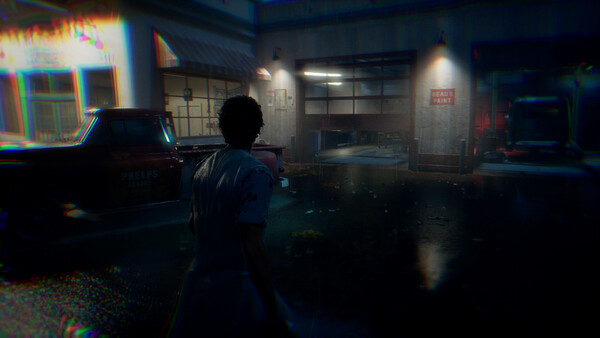
Playing as Michael Myers Against Real Opponents
Michael is not a sprinting monster; he is a relentless, methodical presence. His strength lies in patience, using shadows, doorways, and quiet approaches to close the distance on Survivors who have let their guard down. Against human players, telegraphed pursuits across open streets rarely pay off. Instead, learn the interiors of the Haddonfield homes and cut Survivors off at the exits they are most likely to use.
The town itself is an objective. Civilians and children moving about the neighborhood are part of the Survivors' win condition, and Michael can keep the town unaware by removing witnesses and stopping calls before they go out. Pressuring the Survivors' progress toward the police is often more valuable than chasing one healthy target across the map.
Human Survivors will try to bait you into long chases while a teammate completes an objective elsewhere. Watch for this pattern and break off a pursuit if it is pulling you away from where the real progress is being made. Michael cannot be killed, so there is no need to play cautiously; the only thing to protect is your time.

Team Communication for Survivors
Survivors have no chance of coordinating in silence. Use in-game voice chat or your platform's party chat to share Michael's last known position, which houses have already been searched, and where the children and useful items are located. Keep callouts short and use consistent landmarks, such as street names, notable houses, or the police station, so every teammate understands immediately.
Establish roles before the match begins. One player can act as the scout who tracks Michael and warns the group, one focuses on shepherding civilians and children to safety, and the others push objectives like phone calls and alerting neighbors. When Michael commits to one Survivor, the rest of the team should announce it and immediately use the window to make progress.
Communication also means knowing when not to talk. When hiding, stay quiet in voice chat so a teammate's alarmed shouting does not distract you from watching Michael's movements on screen. Agree in advance on a simple signal for emergencies, such as 'downed' or 'need help,' so that rescues are prompt and no one wastes time asking questions.
Winning as a Coordinated Group
The Survivors' win condition is a race against time and the town's awareness. Spread out early to cover more ground, but never stray so far that you cannot reach a teammate in trouble. Splitting into pairs is a strong compromise: each pair can search and progress objectives while still watching each other's backs when Michael appears.
Michael's greatest tool is fear, and a panicked team makes mistakes. When he is spotted, the sighted player should relay his position and direction of travel while the rest of the team stays on task. Only one player needs to lead him away; the others should treat a chase as an opportunity, not a reason to hide.
Finally, protect what wins the match. Civilians and children who are killed cannot help you, so escort them to safe locations before pushing the most exposed objectives. Once the police have been called, the group should consolidate, choose defensible houses with multiple exits, and stay mobile until help arrives. A team that survives together and keeps Haddonfield aware is one Michael cannot silence.